

Tracking CPR, First Aid, and Staff Training Renewals Before They Expire
By clouddaycaremanager June 12, 2026
Looking after kids and preparing fun activities are the obvious components of running a daycare, but there are multiple operational responsibilities behind the scenes, concerning safety and licensing, that parents will trust to childcare facilities that look after their kids. Tracking staff certifications is one of those important responsibilities that are often overlooked. Every certification, whether it is CPR, safety training, or other training programs mandated for renewal by the state, is part of continuing education and has an expiration date. Failing to renew any one of these certifications may lead to violations of daycare licensing, resulting in legal liability and damage to the daycare’s reputation among parents.
Some daycare directors still rely on paper folders, spreadsheets, sticky notes, or simply their memory to keep track of staff certifications. While this may work temporarily for smaller teams, as staff numbers increase and training requirements become more complex, it becomes less reliable. Expired CPR certifications, missing safety and health course records, and untracked renewal dates are issues most childcare centers in the USA face. Fortunately, modern tracking systems for daycare staff certifications have improved organizing, compliance, and qualification for staff members throughout the year.
Why Certification Tracking Matters in Childcare Centers

Childcare licensing agencies across the United States require daycare employees to complete specific training programs and maintain active certifications. These requirements often include pediatric CPR, first aid certification, child abuse prevention training, emergency preparedness instruction, safe sleep training, and continuing education hours. Depending on the state, some certifications must be renewed annually, while others expire every 2 or 3 years.
Daycare centers face serious legal and operational risks if staff certification tracking is not managed appropriately. An outdated CPR certification may not appear significant. However, it may become a serious legal issue if an emergency occurs and a staff member is unqualified to assist. Expired certification may also mean a daycare center fails a licensing inspection, which may result in monetary penalties, official, mandated corrective measures, or a temporary stop to the center’s activities. Parents have become avid advocates for their children’s safety and expect daycare centers to ensure all staff are appropriately trained to respond to safety concerns.
Having adequate certification tracking creates greater operational efficiencies. Directors are no longer burdened with chasing staff to ensure their certification is kept up to date. Staff receive reminders, and certification documentation is readily available to support upcoming audits and inspections. Rather than an ad hoc response and a scattered filing system, certification management provides a more professional and courteous workflow.
The Hidden Costs of Manual Certification Tracking
Manual tracking has its own hidden operational costs. If unnecessary cash-flow concerns are the reason you still use a filing system, paper-based systems incur costs. One of the biggest hidden operational tracking costs is human error. Renewal dates are written down incorrectly, reminders are never sent, and training certificates are lost.
Overworked staff cannot work efficiently. Daycare directors already have a lot on their plates with parent communication, class planning, billing, training schedule management, and staff management. Manually tracking staff training certificates will only add to their stress and reduce the center’s overall efficiency. There is a high cost when employees leave, and training records are incomplete. There is a lot of confusion about which training sessions are overdue and which need to be renewed.
Noncompliance is also financially costly. Staff training certification is a hidden cost of daycare operation. It is almost always more cost-effective to manage compliance failures than to wait until business fines and emergency training recertifications must be paid.
What Certifications Should Daycares Track?
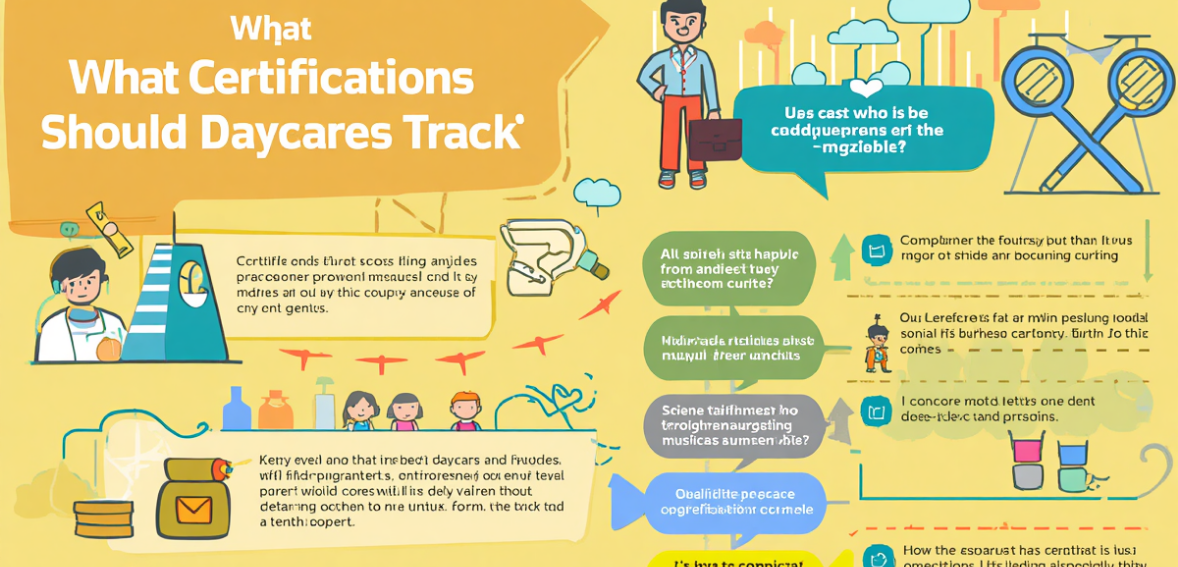
Every daycare center should maintain a centralized system that tracks all employee certifications and mandatory training requirements. The exact requirements vary by state, but most childcare providers must monitor CPR certification renewal dates, pediatric first aid training, medication administration training, food safety instruction, emergency preparedness education, safe sleep certifications, transportation safety training, and continuing education credits.
In addition to licensing requirements, daycare centers often manage staff professional development. Daycare centers may sponsor and pay for workshops and training programs about leadership, behavioral management, curriculum, early childhood education, and more. These programs and workshops improve employee performance and elevate the overall quality of the early childhood education programs at the daycare center. Further, these programs and workshops promote a daycare center’s professionalism and its commitment to staff development.
A complete certification system should include the employee’s name, the type of training, the certification issuance date, the expiration date, the current renewal status, a digital version of the certification, and a scheduled reminder for the expiration date. This system contains everything in a consolidated space and minimizes administrative issues.
How Digital Tracking Systems Improve Compliance
Modern childcare management software has transformed the way daycare businesses manage staff certifications. Instead of relying on manual spreadsheets or paper files, many centers now use digital systems that automate renewal reminders and maintain organized employee records.
Digital daycare staff certification tracking systems include automated reminder features that save significant time. Certification expiration notifications are sent several weeks or even months in advance of potentially disruptive expirations. Staff members are notified early enough such that scheduling their recertification courses is in no way disruptive to licensing or staffing compliance.
Accessibility to training information is greatly improved. During inspections (whether licensing or parent-related), opt for digital platforms and avoid searching through paper files. The documents are now accessible to a compliance manager/director on multiple devices, even while on the go.
Equally important is the reporting feature. Many child-care compliance software platforms include automated spreadsheets that show compliance per staffing certification as up to date, pending, or long overdue. Business owners can prepare and address compliance gaps.
Procare Solutions
An example of a popular childcare management platform is Procare Solutions, which provides daycare and preschool-specific administrative tools. Many daycare centers utilize the platform to optimize employee management and attendance, parent communication, and staff recordkeeping. Tools for digital recordkeeping can help daycare administrators simplify staff certification status by centralizing training records and maintaining compliance documentation.
For childcare management, a major reduction in the administrative burden of daily tasks and recordkeeping is achieved by storing information in a searchable digital environment rather than in scattered spreadsheets and physical records. As daycare businesses expand and employ more complicated and larger staff, the level of organization provided by the application becomes even more important.
Brightwheel
Childcare providers use Brightwheel to support daycare operations, including communication, billing, attendance, and staff management. Daycare administrators prefer cloud-based systems like these because they minimize paperwork and improve visibility of staff records and training.
Moving from manual certification tracking to a dedicated digital platform greatly decreases the risk of missed certification renewals and compliance with credentialing requirements. Automated systems enhance employee accountability by clearly stating and monitoring deadlines and training requirements.
Creating an Effective Certification Renewal Workflow
Successful daycare staff certification tracking depends not only on technology but also on creating a consistent internal workflow. Every daycare center should establish a standard process for onboarding, monitoring, renewing, and documenting staff certifications.
New employees should submit required certifications before working in any capacity. Administrators should log expiration dates and upload copies to the digital tracking system. Delaying this task usually leads to missing important information.
Tracking expiring certifications should occur throughout the year, not just before inspections. Monthly reviews help identify upcoming expirations, and employees have time to book expiration classes. Directors have a responsibility to remind employees about expectations for credential management.
A centralized digital certification system and childcare management software should standardize the storage of certification documents. During staff changes and office reorganizations, important documents shouldn’t be misplaced.
The Role of CPR and First Aid Certifications in Childcare Safety
CPR and first aid certifications deserve special attention because they directly impact child safety during emergencies. In many states, childcare licensing laws require a minimum number of CPR-certified staff members to be present at all times. If certifications expire unexpectedly, staffing schedules may no longer meet legal compliance standards.
Training for pediatric and adult CPR differs because of the specific attention and care required for younger age groups. Childcare facilities must ensure their staff are certified in CPR by an organization that recognizes age-specific differences.
The American Red Cross is one of many organizations that nationally recognize CPR and first aid training programs for childcare services. Child care facilities that require staff to obtain and maintain CPR certification help ensure children’s safety and remain compliant.
Staying prepared for emergencies is an ongoing obligation, especially in training programs. Emergency response becomes more challenging when staff do not actively participate. Critical knowledge and confidence to act is best maintained when training occurs on a regular basis.
How Certification Tracking Builds Parent Trust
Parents increasingly evaluate daycare centers based on professionalism, safety standards, and operational transparency. Families want reassurance that caregivers are properly trained, certified, and prepared to handle emergencies involving children.
Daycare centers that keep their certification records organized feel more confident sharing their standards during center tours or enrollment talks. Parents have lots of questions about staff training, CPR certification, and safety procedures. Explaining a system that tracks staff certification earns the daycare center’s trust.
An organized training system demonstrates and builds the overall perception of quality in a daycare center. Parents are likely to view strong compliance systems as evidence of effective classroom management, strong leadership, and greater organizational focus.
Common Mistakes That Lead to Expired Certifications
One of the most common mistakes daycare centers make is depending entirely on employees to remember their own renewal deadlines. Staff members are often busy balancing classroom responsibilities, personal schedules, and continuing education requirements. Without administrative oversight, certifications can easily expire unnoticed.
Another issue is the failure to keep backup records. Paper certificates can be ruined and/or lost. They can also be inaccessible to you when you need to do inspections. Digital copies help by securing your documents and making them easy to find when you need them.
Some daycare centers also miscalculate how long it takes to schedule renewals. Classes for CPR and certain state-approved training may be available at different times and may not be available at all when you need them during peak renewal times. If you wait until the last few weeks before your certification expires, you may not have a choice but to have compliance gaps.
Poor communication and clarity between administrators and staff are issues. Staff should have comprehensive instructions regarding renewals, the recommended training/providing agencies, and the policy and timelines for reimbursement.
The Future of Daycare Staff Certification Tracking
With changes in childcare regulations, the industry will probably shift toward digital compliance management. Daycare centers will begin using automated systems that consolidate employee files, licensing, and training documentation.
In the future, AI and predictive analytics might enable daycare centers to forecast staffing certification requirements and compliance issues. Enhancements in mobile technology will simplify certification and compliance management through portable devices.
The digital trend within the daycare industry is driven by parental expectations for openness, efficiency, and professionalism among daycare services. Organized management of compliance certifications satisfies all three demands.
Conclusion
Tracking CPR, first aid, and staff training renewals is not just an administrative task for daycare centers. It is a critical component of childcare safety, licensing compliance, operational efficiency, and parent trust. Manual systems may appear manageable at first, but they often lead to preventable compliance risks, administrative stress, and costly errors over time.
Implementing a reliable daycare staff certification-tracking process helps childcare providers maintain organized records, prevent credential expirations, and improve overall operational stability. Whether using dedicated childcare management software or structured digital workflows, proactive certification management protects both daycare businesses and the families they serve.
As regulations become stricter and parents’ expectations continue to rise, daycare centers that prioritize organized certification tracking will be better positioned to maintain compliance, strengthen their reputation, and provide safer environments for children and staff alike.
Frequently Asked Questions
Why is daycare staff certification tracking important?
Daycare staff certification tracking helps childcare centers maintain licensing compliance, prevent expired credentials, improve emergency preparedness, and reduce administrative errors. It also supports safer environments for children and strengthens parent trust.
What certifications do daycare employees usually need?
Most daycare employees are required to have pediatric CPR certification, first aid training, child abuse prevention education, emergency preparedness training, and continuing education credits. Specific requirements vary by state licensing regulations.
How often should CPR certifications be renewed in childcare centers?
Many CPR certifications must be renewed every 2 years, although requirements can vary by state law and training provider. Daycare centers should monitor expiration dates carefully to avoid compliance gaps.
What is the best way to manage daycare staff certifications?
The most effective approach is using a centralized digital system that stores employee records, tracks expiration dates, sends automated reminders, and maintains digital copies of certifications for inspections and audits.