
Childcare Licensing 101: A Director’s Guide to Compliance and Inspections
By Ethan Walker March 16, 2026
The fundamental of early childhood programs in the United States is getting childcare licensing. It ensures the safety of children’s health and overall safety. Directors have to meet strict regulatory standards to ensure that the safety, accountability, and quality are maintained. One of the most stressful parts of running a program is childcare licensing compliance. It is a legal requirement that ensures the reputation, operation, and sustainability of childcare.
The process of licensing is complex and sometimes can bestressful. These regulations are not the same for every state. Inspections are unannounced, and documentation is thorough. However, if you are careful, then childcare licensing compliance can become manageable rather than a burden. It does not matter if you are a new director or an experienced administrator; if you understand the rules and regulations of this guide, then you can have a compliant childcare program.

Childcare Licensing in the United States
Childcare licensing is a mandatory step taken by the government to ensure the health, safety, and care of children. It is done to make sure that the children are under the right supervision. In the United States, childcare licensing varies at the state level. The common purpose of licensing regulations is to protect children from harm. They are in an appropriate and safe environment for their overall development.
Role of Director in Childcare Licensing Compliance
Directors play a crucial role in the program, as they have to ensure that the childcare is legal and safe while following all the rules and regulations at all times. If any violation is found, then the authorities hold the director accountable for it. So, the director must have a thorough understanding of the licensing rules and make sure that they are applied in their program properly. Some of the responsibilities of a director in licensing compliance are:
- Oversee and supervise the daily operations and compliance of the childcare.
- Manage the staff and make sure that they have the required qualifications to work in childcare.
- Make sure that the written licensing policies are up-to-date, maintained, and followed by the staff through training.
- Documents should be accurate and organized by the director, as childcare licensing inspections can happen anytime.
- Have to look into the reports after the inspections and then make necessary changes, if needed.
Childcare Licensing Requirements
In the United States, childcare licensing regulations are different from state to state. But some core childcare licensing requirements are to be followed by the program director. These requirements are:
- One of the most important requirements is the staff-to-child ratios. Based on the children’s age, maximum group sizes and minimum ratios are established. It means that younger children are given more intensive care as compared to older children. The director has to make sure that the ratios are maintained at the time of arrival and departure of the child, during indoor and outdoor activities, during meal time and restroom breaks, and when the staff is on break or leave.
- Licensing regulations also focus on the qualifications of the staff. They have to meet the minimum standard. They should have proper training to work with the program. Moreover, the director should also do a background check, such as criminal records, child abuse, and neglect cases.
- Childcare directors also have to make sure to meet the physical aspect of the licensing regulations. They have to inspect the space for the child, ensuring that safe furnishings, proper restrooms, and hygiene are maintained, as well as that an outdoor play space is available. Additionally, they must verify that building accessibility standards are met.
- One of the fundamental licensing requirements is to keep children at all times under the attentive staff, as the child’s safety is a priority. Directors also have to make sure that staffs understands the supervision expectations and work according to that.
Documentations
You need to have proper documentation for childcare licensing. When inspections are happening, officials go through the documentation to ensure that the program is meeting the regular standards. Some of the important documents are:
- Written policies that address child supervision, guidelines for behaviour and discipline, things to do during an emergency, and information related to medical administration
- Directors should also maintain up-to-date staff information like their criminal records, training they received, first aid and CPR certificates, and their medical statements.
- Children’s records should have their enrollment forms, emergency contact information, and medical and allergy information.
- Documents related to injury, incidents, and medical administration that happened in the program should also be there, as it shows transparency and accountability of the childcare. During inspections, these documents are reviewed frequently.
Health and Hygiene Compliance
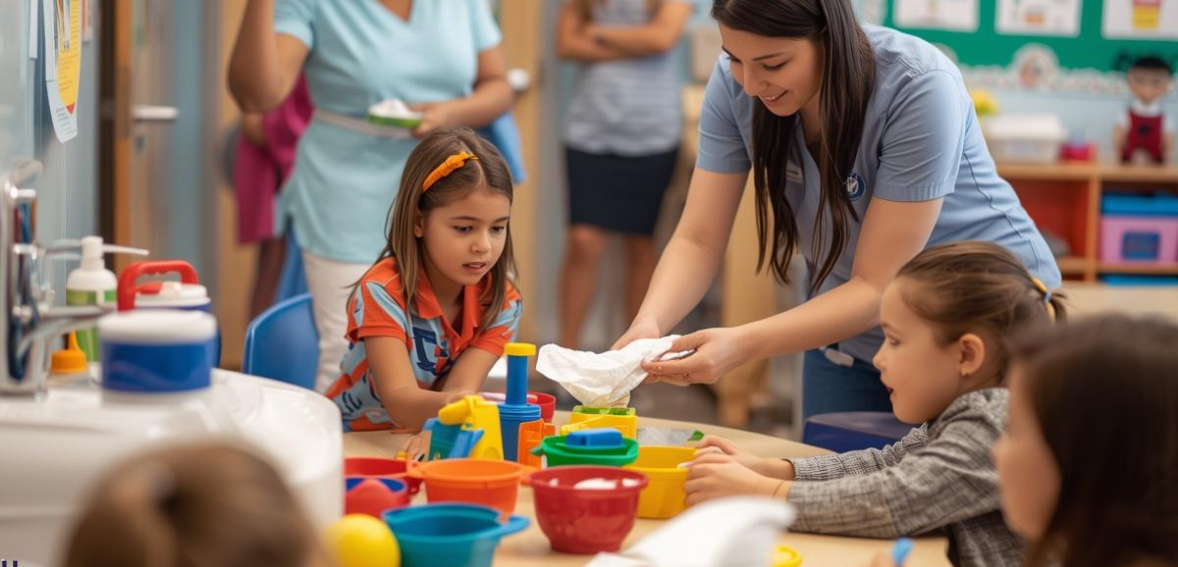
Childcare licensing strictly enforces health and safety regulations. Directors should ensure that their daily practices follow these public health guidelines and licensing standards. Most of the violations happen because of improper implementation of health and safety procedures. Directors should train and monitor their staff. Key areas of health and safety include:
- Classrooms, toys, and bathrooms should be cleaned and sanitized on a daily basis.
- Hazardous materials like cleaning supplies and medications should be stored safely and out of reach of children.
- Staff should use proper diapering and toileting procedures.
- Allergies should be managed properly, and food should be handled safely.
Emergency Protocols
Childcare should be prepared for an emergency. Childcare licensing critically analyzes this aspect. It is required by the childcare program to follow written plans and conduct emergency drills. It helps the staff to be prepared all the time and respond effectively in case of an emergency. Directors must ensure that they have access to emergency supplies. Staff must have certification for CPR and First Aid. Some of the requirements are:
- Evacuation procedures in case of fire.
- Plans in case of lockdown or shelter-in-place.
- Disaster response for high-risk regions.
- Emergency communication protocols.
Staff Training
Directors have to make sure that the staff they are hiring is fully trained. It is important for both the program and compliance quality. Directors have to maintain documentation on staff’s training completion and make sure that they put that training to use in daily activities. Staff need to complete the required number of training, especially on specific topics like:
- Preventing child abuse and neglect, if there is any, and then reporting it.
- Following health and safety procedures.
- Safe sleeping strategies
- Response to emergency protocols,
- Completed training and certificate on CPR and First Aid.
- Guidance and supervision in child’s behaviour.
Childcare Licensing Inspection

Under state regulation, licensing inspections are conducted to keep childcare compliance in check. These inspections help in identifying the areas that need improvement. Licensing officials perform detailed inspections. They review the documents related to staff and children in the program. They observe the dynamic between the staff and children both inside and outside the classroom. They look into the facilities and equipment that the program provides. Also, they interview directors and staff to know more about the program.
Once these processes are completed, the licensing officials issue the report of the program. This report contains the areas that need improvement and whether their program is up to the mark or not.
Preparing for licensing inspections is not something that is done on an instant basis. Directors have to keep their documentation and facilities in check continuously. They have to conduct regular compliance audits internally. They have to check that their program aligns with the licensing regulations. They have to maintain their documents regularly. Staff should be trained for inspections. If there is any issue, then they have to address it immediately rather than waiting for it. If the program maintains consistent compliance, then the violations are fewer and not severe.
The director has to be professional and cooperative during the licensing inspection. It sets the tone for the entire program. They should be respectful towards the licensing officials. They must provide them with the necessary documentation without any delay. During inspection, the director should make sure that the staff is following their normal routine and not acting out of character during inspection. The director should also take notes on the feedback given by the inspector.
After the licensing inspection is completed, the licensing agency makes a report on the program. This report has the violations that the inspector found during their visit and how they have to correct them. It is advised to respond within the time by the director. They should review the report properly, then take action against the violations happening in their program. Then, train their staff on the necessary changes happening in the program and document the correct measures that they are taking. The director must address the violations and take accountability for them. They should monitor compliance and commit to child safety.
Licensing compliance is not something you do once or twice a year. You have to maintain it all year-round. It is a responsibility that needs systems and routines to work consistently. Directors must review the policies regularly. Then, maintain a calendar and reminder for important stuff. They should check for updates on the state licensing regulations and add that compliance in their daily routines. Directors must make compliance a part of their program. It will make the licensing inspections predictable and stress-free.
Conclusion
To have a safe, legal, and high-quality program, childcare licensing is important in the United States. Directors need to have leadership and attentiveness to run a proactive program. Rules and regulations of licensing are complex, but they are made to protect children and have an accountable program.
Directors must understand childcare licensing requirements, maintain year-round compliance, and be ready for random inspections. They must create an environment that follows rules and provides quality care for children. With a thoughtful approach, licensing builds an excellent early childhood education
FAQs
What is childcare licensing, and why is it important?
Childcare licensing is a state-regulated process that ensures early childhood programs meet required health, safety, and supervision standards. It helps protect children from harm and ensures they are cared for in an appropriate environment. Licensing also supports accountability and program quality. For directors, it is both a legal obligation and a foundation for long-term program credibility.
Why is licensing compliance often stressful for childcare directors?
Licensing compliance can feel stressful because regulations differ by state and inspections may happen without notice. Directors must keep records current, train staff consistently, and monitor day-to-day operations carefully. Even minor oversights can lead to violations. The pressure comes from needing to stay prepared at all times, not just during inspection periods.
What role does a director play in childcare licensing compliance?
The director is responsible for ensuring the program operates legally and safely every day. This includes supervising staff, maintaining updated policies, organizing required documentation, and correcting issues after inspections. If violations occur, the director is often held accountable. Strong leadership and knowledge of regulations are essential to staying compliant.
What are the most important childcare licensing requirements?
Some of the most important requirements include staff-to-child ratios, staff qualifications, background checks, and safe physical environments. Programs must also ensure active supervision of children at all times. Licensing rules cover indoor and outdoor spaces, health practices, and accessibility standards. These core requirements help maintain both child safety and program quality.
What documents should a childcare center always keep updated?
A childcare center should maintain written policies, staff records, children’s enrollment and medical records, and incident reports. Inspectors often review these documents to confirm the program is meeting licensing standards. Records should be accurate, organized, and easy to access. Good documentation shows transparency, preparedness, and responsible management.