By Pavan Kumar January 24, 2026
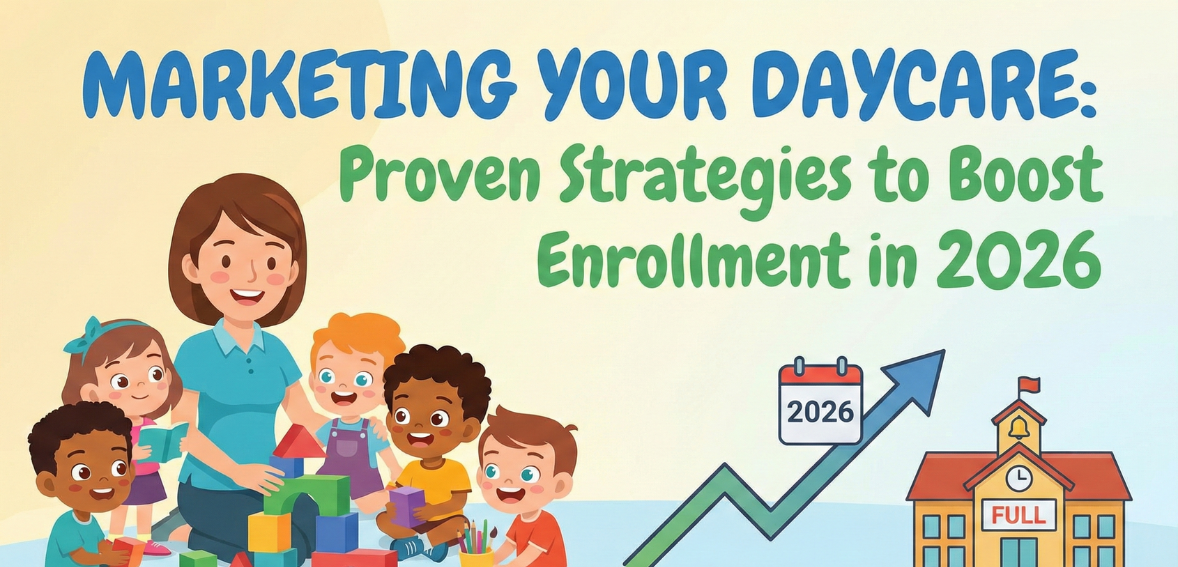
Running a daycare has never been simple, but in 2026, standing out has become even more challenging. Families today have more childcare options than ever, and parents are researching carefully before choosing where to enroll their children. For daycare owners, this means that quality care alone is no longer enough. Effective daycare marketing strategies are now essential to boost daycare enrollment and keep programs operating at full capacity. Whether you manage a home-based program or a large childcare center, a thoughtful marketing approach can help increase daycare admissions while building long-term trust with families in your community.
Marketing a childcare center does not mean aggressive advertising or expensive campaigns. Instead, it involves clearly communicating who you serve, what makes your program valuable, and why families should feel confident choosing you. Childcare center marketing in 2026 blends strong online visibility with genuine local connections. Parents want transparency, consistency, and reassurance that their child will be safe, supported, and engaged. When your marketing reflects those priorities, enrollment growth becomes a natural outcome rather than a constant struggle.
Understanding What Parents Look for in 2026

Before applying any daycare marketing strategies, it helps to understand how parents make decisions today. Most families begin their search online, even if they ultimately enroll based on a friend’s or neighbor’s recommendation. Parents compare locations, read reviews, check social media activity, and look for clear information about schedules, curriculum, and communication practices. If a daycare’s online presence feels outdated or incomplete, many parents move on before ever contacting the daycare.
At the same time, parents value personal connection. A friendly conversation, a well-run open house, or a trusted referral can strongly influence their final decision. Successful marketing connects these digital and human elements. When your online presence matches the real-life experience you provide, parents feel confident taking the next step.
Optimizing Your Online Presence to Attract Local Families
A strong online presence is the foundation of modern daycare marketing strategies. Your website often serves as the first impression for prospective families, and it should clearly explain who you are, where you are located, and what your program offers. Parents should be able to find your address quickly, age groups served, hours of operation, and enrollment availability. A mobile-friendly design is essential because many parents search from their phones during breaks or commutes.
Local search visibility plays a significant role in boosting daycare enrollment. When parents search phrases like “daycare near me” or “best childcare center in my city,” they typically see map listings before websites. Claiming and updating your Google Business profile helps your center appear in local search results. Accurate hours, photos, and contact information reduce friction for parents who want to schedule a tour or ask questions.
Online reviews also influence decisions more than many providers realize. Parents trust feedback from other families because it reflects real experiences rather than marketing language. Encouraging satisfied parents to leave honest reviews helps build credibility over time. Responding politely and professionally to reviews, including negative ones, shows that your center values communication and accountability.
Search engine optimization supports long-term visibility. Writing helpful content that answers common parent questions can attract families who are still early in their search process. Blog topics such as preparing a child for daycare, understanding preschool readiness, and managing separation anxiety naturally align with what parents are already looking for. Platforms like Cloud Daycare Manager often publish similar educational content, showing how informative articles can support both parent engagement and organic search traffic without sounding promotional.
Using Social Media to Build Trust and Visibility

Social media marketing for daycare centers works best when it feels authentic rather than sales-driven. Parents want to see what daily life in your program looks like. Regular posts featuring classroom activities, seasonal projects, or staff highlights give families a sense of your environment and values. Photos and short videos are especially effective because they help parents visualize their child in your care, provided proper permissions are in place.
Consistency matters more than frequency. Posting two or three times a week keeps your center visible without overwhelming followers. When parents comment or send messages, timely responses make a strong impression. Even a brief reply shows that communication is a priority, which reassures families who are evaluating multiple childcare options.
Paid social media advertising can support specific enrollment goals when used carefully. A small, targeted campaign announcing open enrollment or an upcoming open house can reach families within a defined radius of your location. This approach is more efficient than broad advertising because it targets parents most likely to enroll. Clear messaging and simple calls to action help avoid confusion and increase inquiries.
Social media also supports word-of-mouth marketing. When current families engage with your posts, their networks become aware of your center. This informal sharing increases visibility and complements other childcare advertising ideas without requiring a large budget.
Also read: How Digital Attendance Tracking Improves Accuracy & Parent Trust
Strengthening Community Outreach and Local Relationships
Offline marketing remains an integral part of childcare center marketing in 2026, especially for building trust at the local level. Community outreach helps families see your daycare as an active, reliable part of their neighborhood rather than just another business. Hosting an open house allows parents to tour your space, meet staff, and ask questions in a relaxed setting. These events often convert interest into enrollment by removing uncertainty.
Participation in local events extends your reach beyond your immediate network. Community fairs, school events, or family festivals offer opportunities to connect with parents who may not yet be actively seeking childcare. Even brief conversations can plant seeds that lead to future inquiries.
Partnerships with nearby organizations also support enrollment growth. Elementary schools, children’s gyms, libraries, and pediatric offices often share overlapping audiences. Cross-promotion introduces your program to families who already trust those institutions. Being visible as a supportive community member builds familiarity, a decisive factor in parents’ choice of where to enroll their child.
Community involvement also reinforces your reputation. Whether through charity drives, volunteering, or educational workshops, showing up consistently demonstrates commitment beyond enrollment numbers. This approach aligns with daycare enrollment tips that focus on long-term trust rather than quick wins.
Turning Happy Families into Your Best Marketers

Parent referral programs remain one of the most effective ways to increase daycare admissions. Families are more likely to trust recommendations from friends, relatives, and coworkers than any advertisement. When parents have a positive experience, they often want to share it. A referral program makes that process more visible and appreciated.
Referral incentives do not need to be complex or expensive. A tuition credit, a small thank-you gift, or another meaningful acknowledgment can motivate referrals while respecting your budget. The key is clarity. Parents should understand how referrals work and what to expect if someone they recommend enrolls.
Delivering consistent, high-quality care is the foundation of any referral program. Parents are unlikely to recommend a daycare unless they genuinely feel confident in the service. Clear communication, reliable routines, and responsive staff all contribute to experiences that parents want to talk about. Tools like Cloud Daycare Manager can help support consistent communication, which indirectly strengthens referral potential without being the focus of your marketing message.
Maintaining Consistent Marketing Materials and Messaging
Consistency across all marketing materials helps parents quickly understand what makes your daycare special. Your logo, colors, and tone should feel aligned whether parents see your website, a social media post, or a community flyer. This familiarity builds recognition and reduces confusion during the decision-making process.
Clear messaging matters just as much as visual consistency. Parents should be able to identify your value proposition without having to guess. This might include a specific teaching approach, flexible scheduling, smaller group sizes, or strong parent communication practices. When these strengths are communicated clearly, families can quickly determine whether your program fits their needs.
Email marketing supports ongoing engagement with interested families. Parents who inquire but cannot enroll immediately often appreciate occasional updates. Sharing newsletters, enrollment announcements, or event invitations keeps your center top of mind. This approach is beneficial for maintaining relationships with families who may enroll in the future.
Physical presentation also plays a role in marketing—signage, banners, and your facility’s exterior appearance influence first impressions. When your location looks welcoming and well-maintained, it reinforces the professionalism parents see online.
Measuring What Works and Adjusting Your Approach

Marketing efforts are most effective when they are evaluated regularly. Tracking where inquiries come from helps identify which daycare marketing strategies are delivering results. Asking parents how they heard about your center provides simple but valuable insights. Over time, patterns emerge that guide future decisions.
Digital platforms offer basic analytics that show website visits and social media engagement. These numbers provide context, but enrollment outcomes matter most. If certain efforts lead to more tours or faster enrollment, they deserve continued attention. If others show little impact, adjusting or simplifying your approach can save time and resources.
Marketing is not static. Family needs, local competition, and online platforms evolve. A willingness to adapt helps childcare center marketing remain effective in 2026 and beyond. Small improvements made consistently often produce better results than large changes made infrequently.
Building Sustainable Enrollment Growth in 2026
Boosting daycare enrollment is not about chasing every new marketing trend. It is about creating a clear, trustworthy presence that parents can easily find and understand. By combining strong online visibility with genuine community engagement, childcare providers can increase daycare admissions while building lasting relationships with families.
The most effective daycare marketing strategies in 2026 are grounded in communication, consistency, and care. When parents feel informed and welcomed before they ever walk through your door, enrollment growth becomes a reflection of trust rather than persuasion.
Conclusion: Turning Visibility into Lasting Enrollment Growth
Marketing your daycare in 2026 is ultimately about helping the right families find, understand, and trust you. When your online presence clearly answers parent questions, your social media reflects real daily experiences, and your community knows you as a reliable childcare partner, enrollment growth becomes sustainable rather than seasonal. The most effective daycare marketing strategies are not flashy or complicated; they are consistent, parent-focused, and grounded in absolute value. By aligning your messaging with what families truly care about and reinforcing it at every touchpoint, you position your center to steadily and confidently boost daycare enrollment, even in a competitive childcare landscape.
FAQs
How long does it usually take to see results from daycare marketing efforts?
Marketing results vary based on location, competition, and consistency. Online improvements, such as improved local search visibility, may take a few months to show impact, while referrals and community events can generate inquiries more quickly. The key is to stay consistent and track where new families are coming from. Over time, these efforts compound, leading to more predictable enrollment growth.
Is it better to focus on online marketing or local community outreach?
Both matter, and they work best together. Online marketing helps parents discover your daycare, while community outreach builds trust and familiarity. Many families first find a center online and then feel reassured by seeing it active in the local community. Balancing both approaches supports stronger and more reliable enrollment outcomes.
How often should a daycare update its website and online listings?
Your website and listings should always reflect the most up-to-date information. Hours, contact details, enrollment availability, and photos should be reviewed regularly, at least every few months. Even minor updates signal that your center is active and attentive. Parents are more likely to contact a daycare that appears current and well-maintained online.
Can referral programs really make a difference in boosting enrollment?
Yes, referrals are one of the most trusted sources for parents choosing childcare. Families value recommendations from people they know because those experiences feel honest and relevant. A simple referral program encourages parents to share their positive experiences. When paired with strong day-to-day care, referrals can significantly increase daycare admissions.
What is the biggest marketing mistake daycare owners should avoid?
One common mistake is inconsistency. Mixed messages, outdated information, or irregular communication can confuse parents and reduce trust. Another issue is trying too many strategies at once without tracking results. Focusing on a few clear, well-executed efforts makes marketing more effective and easier to manage over time.